

Navigating job interviews can be daunting, especially when you encounter questions that might feel a bit too personal. It’s important to know what recruiters in Australia can and can’t ask you during an interview. This guide will help you understand your rights and how to handle inappropriate questions with confidence.
Understanding Protected Attributes
In Australia, several laws protect job applicants from discrimination based on certain attributes. The Equal Opportunity Act 2010 (Vic) and the Sex Discrimination Act 1984 (Cth) are among the key pieces of legislation. These laws ensure that employers cannot discriminate against you based on:
- Age
- Gender identity
- Disability (mental or physical)
- Race
- Religion
- Sexual orientation
- Marital status
- Parental or carer status
- Physical features
- Political beliefs
For a full list, you can check the Victorian Equal Opportunity and Human Rights Commission and the Australian Human Rights Commission.

Recruiters are allowed to ask questions that are directly related to your ability to perform the job. For instance:
- “Are you able to work flexible hours?”
- “Do you have the necessary certifications for this role?”
- “Can you perform the essential functions of this job with or without reasonable accommodation?”
These questions are pertinent to assessing whether you can fulfill the job requirements.
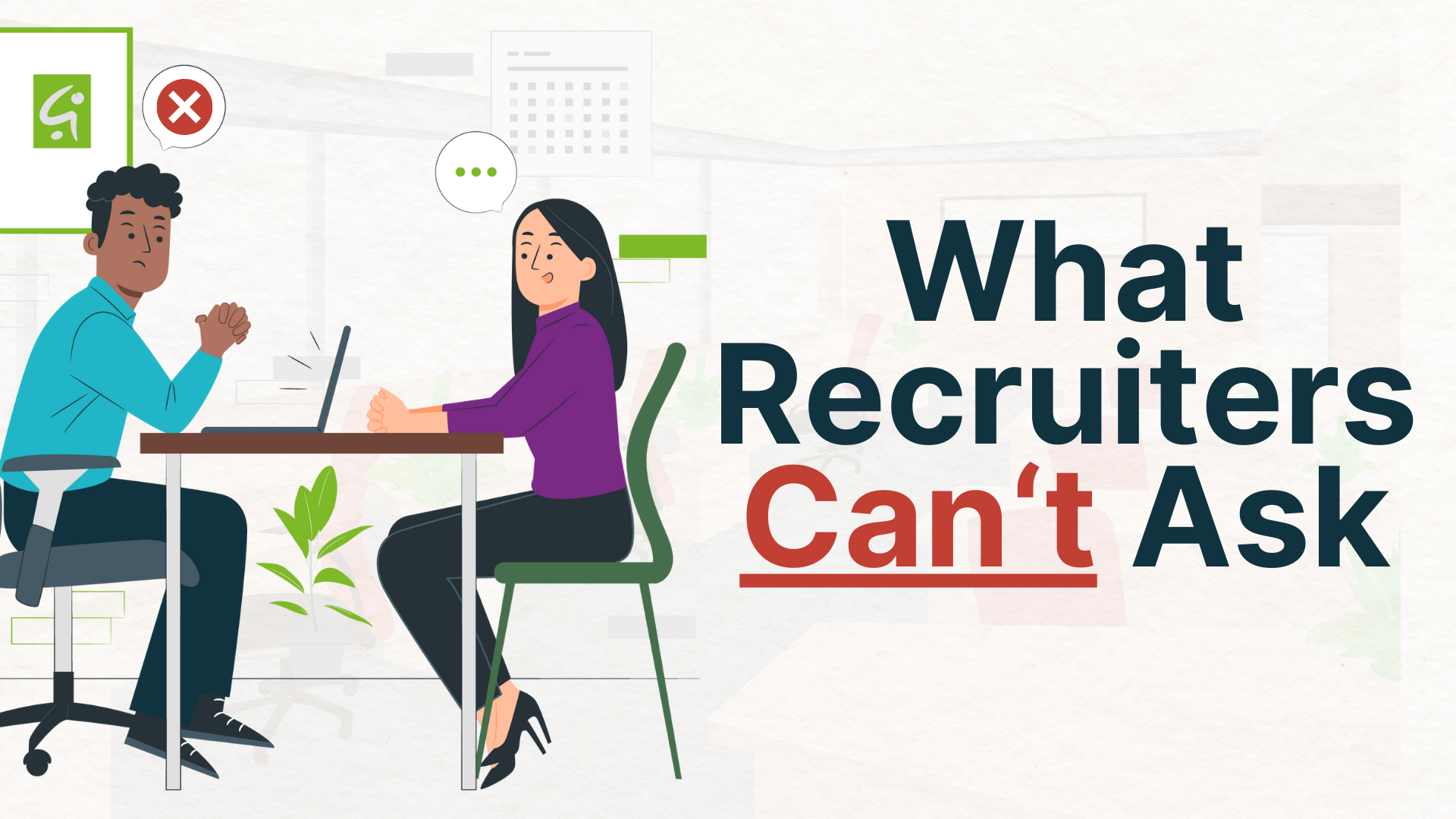
Questions that delve into your personal life or identity, unless they are directly relevant to the job, are generally off-limits. Examples of inappropriate questions include:
- “How old are you?”
- “Are you married?”
- “Do you have children?”
- “What is your sexual orientation?”
- “What is your religion?”
These questions do not pertain to your ability to perform job duties and are protected under anti-discrimination laws.

If you encounter an inappropriate question during an interview, it’s essential to handle it tactfully. Here are some strategies:
- Politely Deflect: You can redirect the conversation back to your qualifications. For example:
- Question: “Do you have any children?”
- Response: “I can assure you that my personal life won’t affect my dedication to this role. Can we discuss my experience with managing projects?”
- Seek Clarification: Sometimes, the intent behind a question might not be clear. Asking for clarification can help.
- Question: “What is your religion?”
- Response: “Can you clarify how this is relevant to the job role?”
- Address the Concern: If you feel comfortable, address the underlying concern directly.
- Question: “How old are you?”
- Response: “I have extensive experience that I believe is very relevant to the requirements of this position.”
- Refuse Politely: You have the right to refuse to answer questions that are not job-related.
- Question: “What is your sexual orientation?”
- Response: “I prefer to keep my personal life private, but I am very excited about discussing how my skills align with this role.”
Questions About Neurodiversity
Neurodiversity includes conditions such as autism, ADHD, dyslexia, and other cognitive differences. Employers should not ask about neurodiversity unless it is directly relevant to the job or necessary for providing reasonable accommodations. Examples of inappropriate questions include:
- “Do you have ADHD?”
- “Are you autistic?”
Disclosing Neurodiversity
You are not legally required to disclose your neurodiversity in an interview. Disclosure is a personal decision and depends on your comfort level and the relevance to the job. Here are some tips on how to handle disclosure:
- Consider the Relevance: If your neurodiversity impacts your job performance or requires accommodations, it might be beneficial to disclose it. For example:
- “I have dyslexia, which means I might take a bit longer with written tasks, but I excel in problem-solving and verbal communication.”
- Frame Positively: Highlight how your neurodiversity contributes to your strengths and how you manage it effectively.
- “My ADHD allows me to think creatively and manage multiple tasks efficiently. I use specific strategies to stay organized and meet deadlines.”
- Discuss Accommodations: If you need specific accommodations, it’s helpful to mention them and how they assist your performance.
- “I work best with clear deadlines and regular check-ins, which help me stay on track and deliver high-quality work.”
- Seek Support: If you’re unsure about disclosure, consider discussing it with a trusted mentor, career advisor, or disability support service.
Reporting Inappropriate Questions
If you believe that a question was discriminatory and it impacted the outcome of your interview, you can take the following steps:
- Document the Incident: Write down the question, the context, and your response as soon as possible.
- Report to the Company: Contact the HR department of the company and report the incident. Provide them with the details and your concerns.
- Seek Legal Advice: If you feel your complaint was not adequately addressed, consider seeking advice from legal professionals or organizations such as the Fair Work Ombudsman or the Australian Human Rights Commission.
Real-World Example
In a notable case, a job applicant in Australia was asked about her plans for having children during an interview. She felt this was inappropriate and reported the incident to the company’s HR department. The company took her complaint seriously, conducted an internal investigation, and implemented additional training for their recruitment team to prevent future occurrences. This case highlights the importance of understanding your rights and taking action when necessary.
Examples of some of the worst interview questions
To add some colour to the discussion, here are a few examples of the worst and most extreme questions people have reported on various chat sites:
- “Are you planning to get pregnant soon?” — This question is not only inappropriate but also illegal. Employers should not ask about your family planning decisions.
- “What is your political affiliation?” — Unless the job is directly related to political work, this question is irrelevant and should not be asked.
- “Do you believe in God?” — Questions about religion are off-limits and can be seen as discriminatory.
- “How much do you weigh?” — This question is intrusive and unrelated to job performance unless there is a legitimate occupational requirement.
- “What medications are you currently taking?” — Employers should not inquire about your medical history or current medications unless they directly impact your job performance and require accommodations.
- “What’s your astrological sign?” — While seemingly harmless, this question is irrelevant to job performance and could be seen as unprofessional.
- “How do you handle periods?” — This intrusive question was reported by a female applicant and is wholly inappropriate and irrelevant to job performance.
- “Do you have any debts?” — Financial status is personal and not relevant to job qualifications, making this question inappropriate.
- “Who did you vote for in the last election?” — Political beliefs are private, and asking this can be seen as discriminatory.
- “Are you a smoker?” — This question should be avoided unless there are specific health and safety reasons related to the job.
Have you experienced any of these questions in your job search?
Conclusion
Understanding what recruiters can and can’t ask during an interview empowers you to navigate the job search process with confidence. By knowing your rights and how to handle inappropriate questions, you can ensure that your job search is both fair and respectful. Remember, your qualifications and experience are what truly matter, and you have every right to keep your personal attributes private unless they are directly relevant to the job. Happy job hunting!
For more detailed information, you can visit resources like the Fair Work Ombudsman and the Australian Human Rights Commission.
Career Money Life – Different on Purpose.
We empower our job seekers with not only a choice of coach and services but also expertise to ensure they know their rights so they can confidently navigate the job market.
Contact us to learn how you can empower your departing employees, too.
Written by Sandy Hutchison, Founder and CEO, Career Money Life.
 Advice from our Experts